What Is an Integrated Marketing Agency?
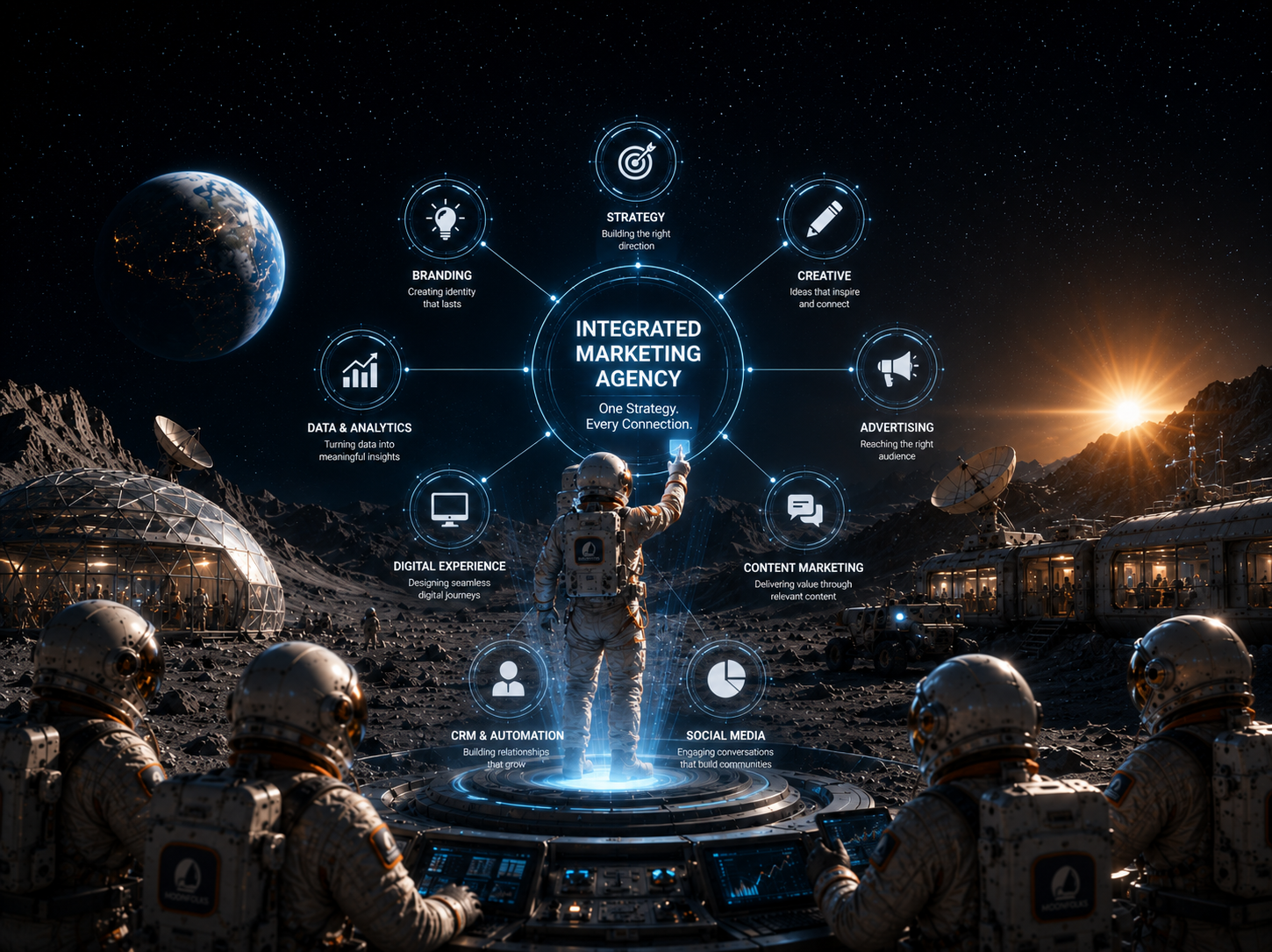
Marketing has become more connected than ever before.
Customers no longer interact with brands through a single channel. They might first discover a business on social media, visit its website, subscribe to a newsletter, attend an event, and eventually make a purchase weeks or even months later. Every interaction contributes to how they perceive a brand.
As customer journeys become increasingly complex, businesses need more than isolated marketing activities. They need a connected strategy that brings together branding, creativity, digital experiences, content, technology, and data.
This is where an Integrated Marketing Agency plays an important role. Rather than managing individual marketing functions separately, an integrated approach ensures every touchpoint works together to create a consistent brand experience and support long-term business growth.
What Does "Integrated Marketing" Mean?
Integrated marketing is the practice of aligning all marketing and communication activities under a single strategic direction. Instead of treating advertising, branding, website development, social media, CRM, content marketing, and digital campaigns as separate initiatives, integrated marketing connects them into one cohesive customer experience.
The objective is simple: every interaction should communicate the same brand values, reinforce the same message, and contribute to the same business goals. This approach not only strengthens brand consistency but also improves collaboration between teams, making marketing efforts more effective and measurable.
Services Offered by an Integrated Marketing Agency
While every agency has its own strengths, an integrated marketing agency typically offers services that span multiple disciplines, including:
Brand Strategy
Brand Identity & Design
Creative Campaign Development
Advertising
Website Design & Development
Digital Marketing
Content Strategy & Production
Social Media Marketing
CRM & Customer Engagement
Analytics & Performance Measurement
Rather than delivering these services independently, an integrated agency develops them as part of a unified strategy, ensuring every initiative supports the broader business objectives.
Benefits for Businesses
One of the greatest advantages of working with an integrated marketing agency is consistency.
When every marketing activity is aligned under one strategy, businesses can communicate more clearly, respond more quickly to market changes, and create stronger customer relationships.
An integrated approach also helps businesses:
Deliver a consistent brand experience across every channel.
Improve collaboration between marketing, creative, and technology teams.
Reduce duplication of work across multiple vendors.
Make better decisions through shared insights and data.
Adapt more efficiently as business priorities evolve.
Ultimately, integration enables businesses to focus less on managing individual marketing activities and more on achieving meaningful business outcomes.
Why Integration Improves Customer Experience
Customers don't think in channels but they think in experiences.
Whether someone discovers your brand through an advertisement, visits your website, receives an email, or interacts with customer service, they expect a seamless and consistent experience. When different marketing activities are managed independently, customers may receive inconsistent messaging, disconnected experiences, or conflicting brand perceptions. Integrated marketing helps eliminate these gaps by ensuring every touchpoint works together.
The result is a customer journey that feels more cohesive, more relevant, and more memorable. For businesses, this often leads to stronger engagement, greater trust, and longer-lasting customer relationships.
Common Misconceptions About Integrated Marketing
Integrated marketing is sometimes misunderstood.
One common misconception is that it simply means offering many different services. In reality, integration is not about the number of services but it is about how those services work together. Another misconception is that integrated marketing is only suitable for large organizations. In fact, businesses of all sizes can benefit from having a connected marketing strategy. Even smaller businesses often see better results when their branding, website, content, advertising, and customer communications support one another.
Finally, integrated marketing should not be confused with doing everything at once. The goal is not to use every marketing channel available, but to identify the right combination of channels that best supports the customer journey and business objectives.
Why Moonfolks Uses an Integrated Approach
At Moonfolks, we believe meaningful growth happens when strategy, creativity, technology, and customer experience work together. Our integrated approach is built around five connected pillars that help brands transform ideas into measurable business impact.
Purpose to Commerce (advertising services), connecting brand purpose with customer value to build long-term relevance.
Content to Commerce (digital and social), creating content that not only engages audiences but also drives measurable business outcomes.
Experience to Commerce (activation and shopper), designing seamless digital and physical experiences that inspire action.
Reputation to Commerce (PR and influencer marketing), strengthening brand trust and credibility to support sustainable growth.
Connection (media services), fostering authentic relationships between brands, people, and communities across every touchpoint.
Rather than treating branding, advertising, content, digital experiences, and technology as separate disciplines, we bring them together through one integrated strategy.
Working across Southeast Asia, including Indonesia, Brunei, and Vietnam has reinforced our belief that successful brands are built through consistency, collaboration, and a deep understanding of people.
Every solution we create is designed not only to deliver creative excellence, but also to support sustainable business growth.
Frequently Asked Questions
What is an Integrated Marketing Agency?
An Integrated Marketing Agency provides multiple marketing services under one connected strategy, helping businesses align branding, advertising, digital experiences, content, CRM, and analytics to create a consistent customer experience.
How is an Integrated Marketing Agency different from a traditional advertising agency?
Traditional advertising agencies often focus primarily on campaign development and advertising. An Integrated Marketing Agency connects multiple disciplines including strategy, branding, creative, digital marketing, technology, CRM, and analytics to support broader business objectives.
Is integrated marketing suitable for small businesses?
Yes. Businesses of all sizes can benefit from integrated marketing. Having a clear and connected strategy helps ensure every marketing investment contributes toward the same goals.
Why is customer experience important in integrated marketing?
Customers interact with brands across many different touchpoints. Integrated marketing ensures these experiences remain consistent, creating stronger relationships, improving trust, and increasing long-term customer loyalty.
Summary
Marketing is no longer about managing individual channels but it is about creating connected experiences. Businesses that adopt an integrated approach are better equipped to deliver consistent communications, build stronger customer relationships, and adapt to changing market expectations.
An Integrated Marketing Agency helps make this possible by bringing together strategy, creativity, technology, and data under one unified vision. When every customer interaction supports the same business objective, marketing becomes more than a collection of campaigns, it becomes a driver of sustainable growth.