The Future of Brand Experience: Why Every Touchpoint Matters
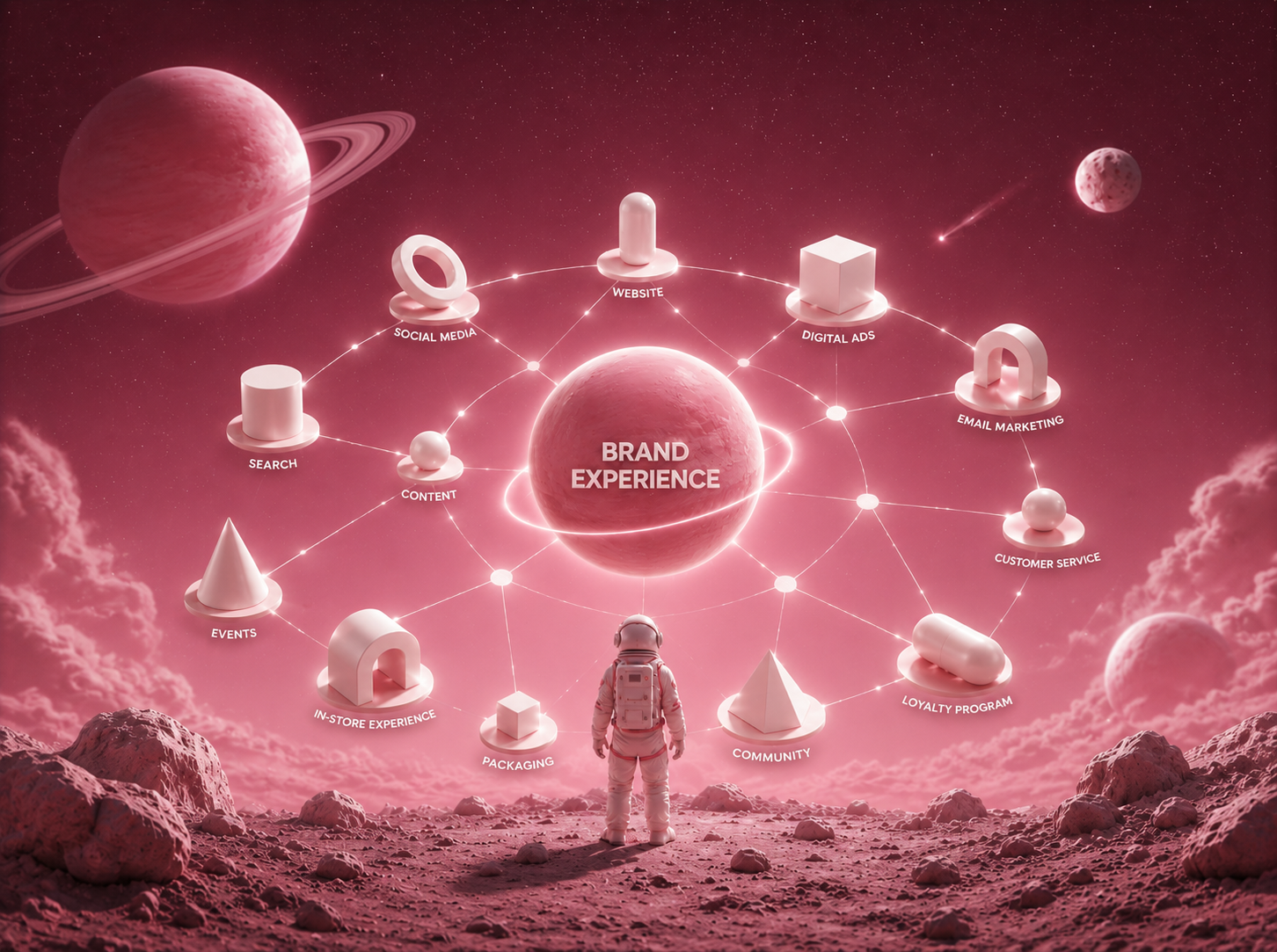
In today's increasingly connected world, customers don't simply buy products or services, they remember the experiences brands create.
From discovering a brand through social media, browsing its website, reading customer reviews, receiving an email, interacting with customer support, or visiting a physical store, every interaction shapes how people perceive a business.
As customer expectations continue to evolve, businesses can no longer treat marketing channels as separate activities. Every touchpoint should work together to create one seamless and consistent experience. This is where Brand Experience becomes one of the most important competitive advantages.
Rather than focusing on individual campaigns, leading organizations invest in a comprehensive Brand Experience Strategy that connects creativity, technology, data, and customer relationships into one cohesive journey.
What Is Brand Experience?
Brand Experience refers to the overall impression customers develop through every interaction they have with a brand.
Unlike branding, which defines how a company wants to be perceived, brand experience reflects how customers actually experience that brand in real life. It extends beyond visual identity and advertising to include every interaction across digital and physical environments.
A strong brand experience is built through:
Website usability
Digital experiences
Social media engagement
Content marketing
CRM communication
Customer service
Retail experiences
Events
Product interactions
Advertising campaigns
Every interaction contributes to customer perception. When these experiences consistently reinforce the same values and message, brands become more memorable, trusted, and differentiated.
Understanding Every Customer Touchpoint
Today's customer journey is far more complex than it was just a few years ago.
Customers move fluidly between multiple channels before making a purchase decision. A typical journey might look like this:
Discovering a brand through social media.
Ask AI tools like ChatGPT, Gemini, Copilot, etc.
Searching on Google.
Visiting the company's website.
Reading educational content.
Downloading a guide.
Receiving email communication through CRM.
Speaking with sales.
Purchasing a product.
Receiving post-purchase support.
Sharing their experience with others.
Every interaction contributes to the way customers perceive a brand. While businesses often organize their efforts across different teams and channels, customers experience them as a single journey. That's why the real challenge isn't managing individual touchpoints, but ensuring every interaction feels like part of one seamless and consistent brand experience.
Why Consistency Across Channels Matters
Consistency builds confidence.
Customers don't evaluate brands based on a single interaction. Instead, they form opinions through the accumulation of experiences across every touchpoint. When each interaction delivers a consistent tone of voice, visual identity, messaging, and customer experience, trust grows naturally over time. But consistency is easily broken. A compelling advertising campaign can quickly lose its impact if customers are met with an outdated website or disconnected customer service. Even when individual channels perform well, inconsistencies create friction and diminish the overall brand experience.
Brand consistency ensures customers receive one unified experience whether they interact through:
Website
Social media
Email marketing
CRM
Advertising
Customer support
Physical events
Retail environments
This consistency strengthens recognition, credibility, and long-term customer loyalty.
Connecting Digital and Physical Experiences
Customers no longer distinguish between online and offline interactions.
They expect brands to recognize them regardless of where the interaction happens. Someone may first discover a business through LinkedIn, attend an industry event, visit the website later, subscribe to a newsletter, and eventually become a customer months afterward. Each interaction should feel like part of one continuous conversation. This requires businesses to connect digital and physical experiences through an omnichannel marketing approach.
Rather than treating each department independently, marketing, sales, customer support, CRM, and brand communications should work together to create a seamless customer journey. The result is a stronger emotional connection between customers and the brand.
Using Data to Improve Brand Experience
Exceptional experiences don't happen by accident. They are designed using customer insights.
Today's businesses have access to more information than ever before, including:
CRM data
Website analytics
Campaign performance
Customer feedback
Purchase history
Behavioral analytics
Customer engagement metrics
These insights help organizations understand:
What customers are looking for
Where they experience friction
Which content performs best
Which channels drive engagement
How customers move through the buying journey
When combined with creativity, data enables businesses to personalize communication without losing authenticity. Rather than sending more messages, brands can deliver the right message at the right moment. This is how customer experience becomes increasingly relevant over time.
The Role of an Integrated Marketing Agency
Creating a connected brand experience requires expertise across multiple disciplines.
It is no longer enough to have separate teams managing branding, advertising, websites, CRM, content, and analytics independently. An Integrated Marketing Agency brings these capabilities together under one strategic direction.
This integrated approach combines:
Brand Strategy
Creative Development
Advertising
Digital Marketing
Website Development
Content Strategy
CRM
Customer Journey Design
Analytics
Technology
Instead of optimizing individual campaigns, an integrated approach optimizes the entire customer experience. Every touchpoint becomes part of one connected ecosystem designed to support long-term business growth.
How Moonfolks Creates Connected Brand Experiences
At Moonfolks, we believe memorable customer experiences begin with strategy and are strengthened through consistent execution across every touchpoint.
Rather than viewing branding, creativity, technology, and data as separate disciplines, we bring them together through five interconnected pillars that help businesses create meaningful relationships and measurable growth.
Purpose to Commerce (advertising services), connecting brand purpose with customer value to build long-term relevance.
Experience to Commerce (activation and shopper), designing seamless digital and physical experiences that inspire meaningful action.
Content to Commerce (digital and social), creating content that engages audiences while driving measurable business outcomes.
Reputation to Commerce (PR and influencer marketing), strengthening trust and credibility to support sustainable growth.
Connection (media services), fostering authentic relationships between brands, people, and communities across every touchpoint.
Working across Southeast Asia, including Indonesia, Brunei, and Vietnam has shown us that every market is unique. They create experiences that feel connected, consistent, and genuinely valuable from beginning to end.
Frequently Asked Questions
What is Brand Experience?
Brand Experience is the overall impression customers develop through every interaction they have with a business, including digital, physical, and emotional experiences.
How is Brand Experience different from Customer Experience?
Customer Experience focuses on interactions throughout the buying journey, while Brand Experience encompasses the broader emotional perception customers build through every brand touchpoint.
Why is consistency important across customer touchpoints?
Consistent messaging, design, and experiences help build trust, strengthen brand recognition, and improve customer loyalty across every stage of the customer journey.
What is Omnichannel Marketing?
Omnichannel Marketing connects online and offline channels into one seamless customer experience, ensuring customers receive consistent interactions regardless of where they engage with a brand.
Why work with an Integrated Marketing Agency?
An Integrated Marketing Agency aligns brand strategy, creativity, digital experiences, CRM, content, advertising, and analytics into one connected approach, helping businesses deliver consistent brand experiences and sustainable growth.
Summary
As customer expectations continue to evolve, Brand Experience is becoming one of the most valuable assets a business can build.
Every website visit, advertisement, social media interaction, email, event, and customer conversation shapes how people remember a brand. Organizations that invest in a connected Brand Experience Strategy supported by creativity, data, technology, and integrated marketing are better positioned to build trust, strengthen customer relationships, and achieve sustainable business growth. Ultimately, customers may forget individual campaigns, but they rarely forget how a brand made them feel.